

linkedin does not use 360brew
If you didn’t know, I am the creator of The SEO Handbook and over there I use AI to help me research and draft the content. Whilst working on a piece about LinkedIn Search I saw that the research claimed LinkedIn used something called “360Brew” as part of its ranking algorithm.
I love a good brew (I was gutted to find out Yorkshire Tea are discontinuing their Caramelised Biscuit Brew flavour, so I may have started hoarding it) and 360 brews sound like my kinda party - so I looked a little deeper, and went down a little rabbit hole - which ended up being one of the best lessons about the pitfalls of trusting AI research.
is 360brew part of linkedin’s algorithm?
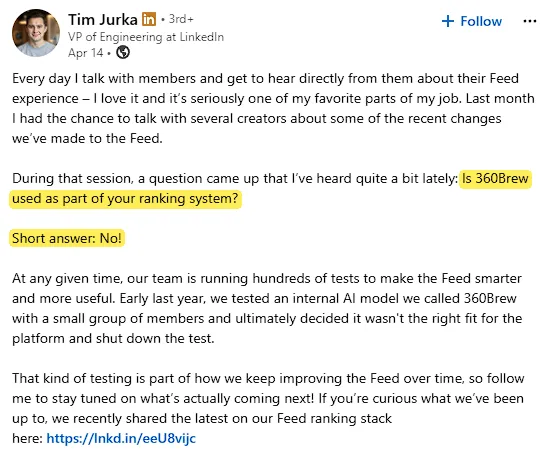
In 2025, a research paper called “360Brew: A Decoder-only Foundation Model for Personalized Ranking and Recommendation” appeared online, written by authors from LinkedIn. This research paper got found, cited and referenced across the web. However, months after publication the paper was withdrawn by its lead author, and in April 2026 LinkedIn’s VP of Engineering, Tim Jurka, answered the question directly:
Is 360Brew used as part of your ranking system?
Short answer: No!
At any given time, our team is running hundreds of tests to make the Feed smarter and more useful. Early last year, we tested an internal AI model we called 360Brew with a small group of members and ultimately decided it wasn’t the right fit for the platform and shut down the test.
But neither the paper being withdrawn nor Jurka’s definitive statement matters when loads of websites still claim 360Brew is in use. It’s even in a Forbes article. Those pages get picked up in grounding searches, and it’s very likely made its way into training data too. So something that was only ever briefly (and partly) true is now being regurgitated by LLMs and repeated in AI-generated articles nobody has properly checked, each one reinforcing the next. It’s the ai ouroboros I wrote about when Google released its AI search guidance.
It’s very convenient for my point that Google added more to its AI guidance at the start of October, specifically to its page on using generative AI content:
Keep in mind that generative models don’t retrieve facts, but predict a likely sequence of words based on their training data. Because of this, generative AI outputs may contain inaccuracies (also known as hallucinations). It is critical to manually factcheck and review all AI-generated content for accuracy and trustworthiness before publishing.
I searched for “LinkedIn algorithm” and “360brew” whilst writing this and the AI Overview refers to it as though it’s still in use. You can search something like “360brew not in use” and it’ll give you the corrected status, but somebody searching for that already knows this and the response just validates it - I even asked “is 360brew still in use?” and the reply said it was.
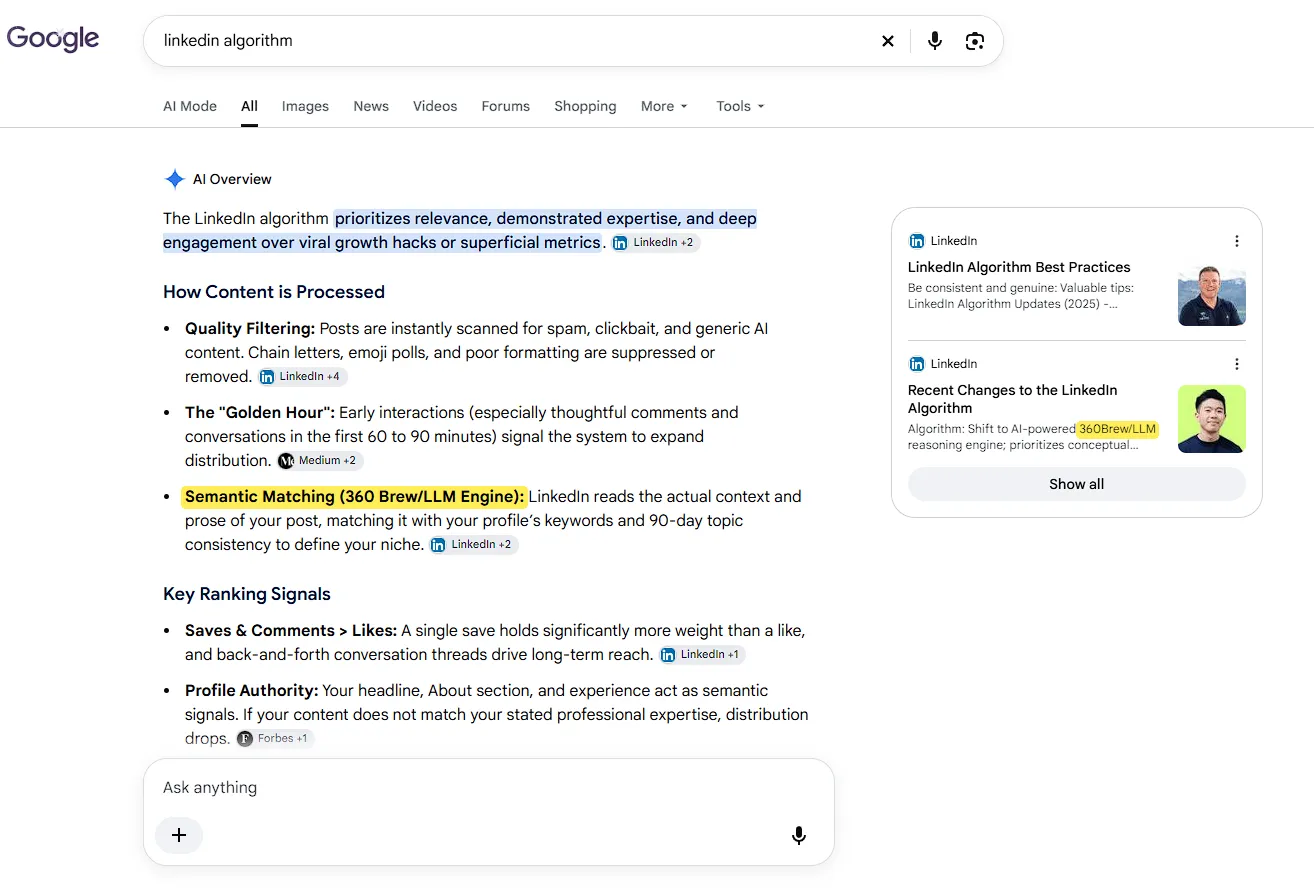
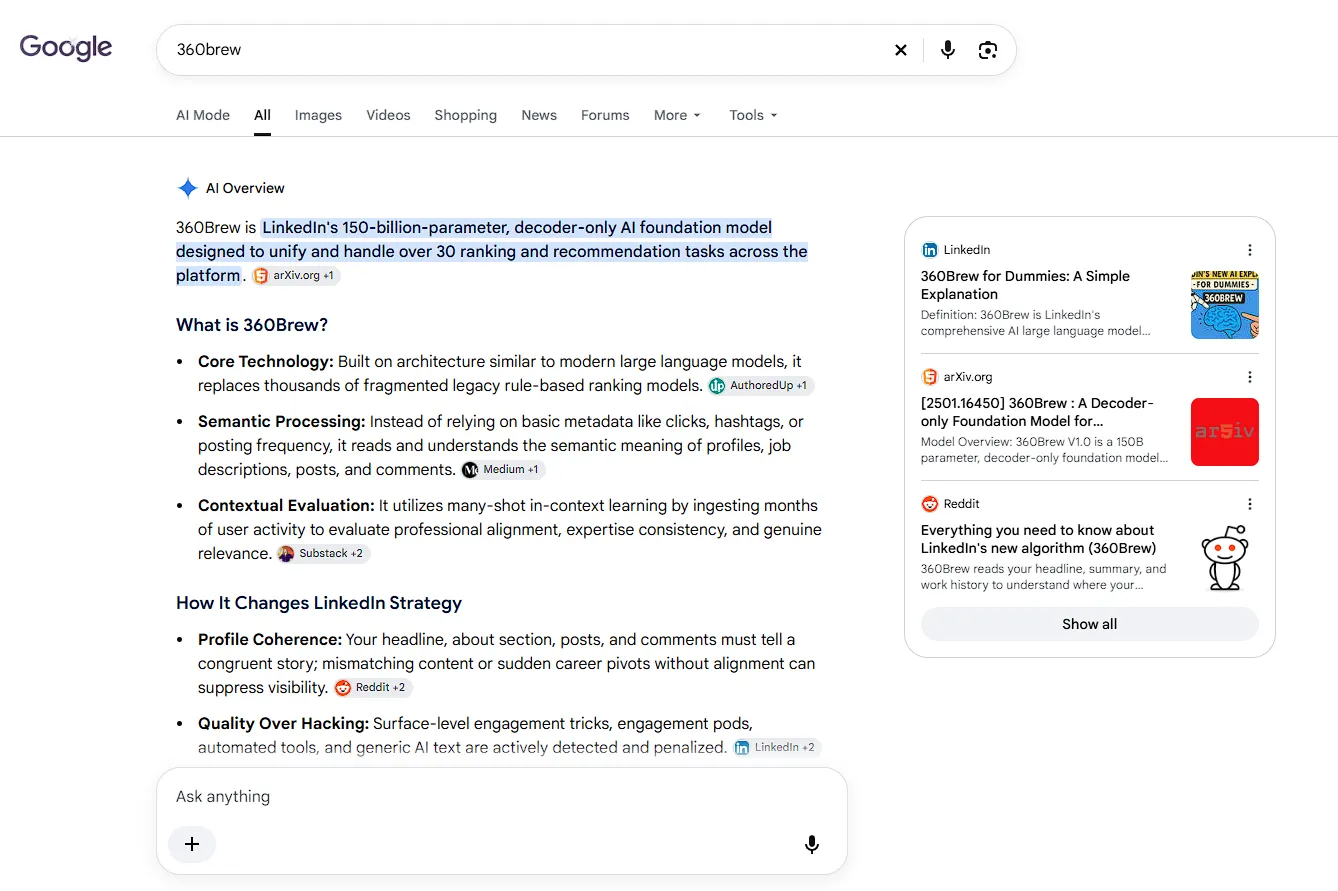
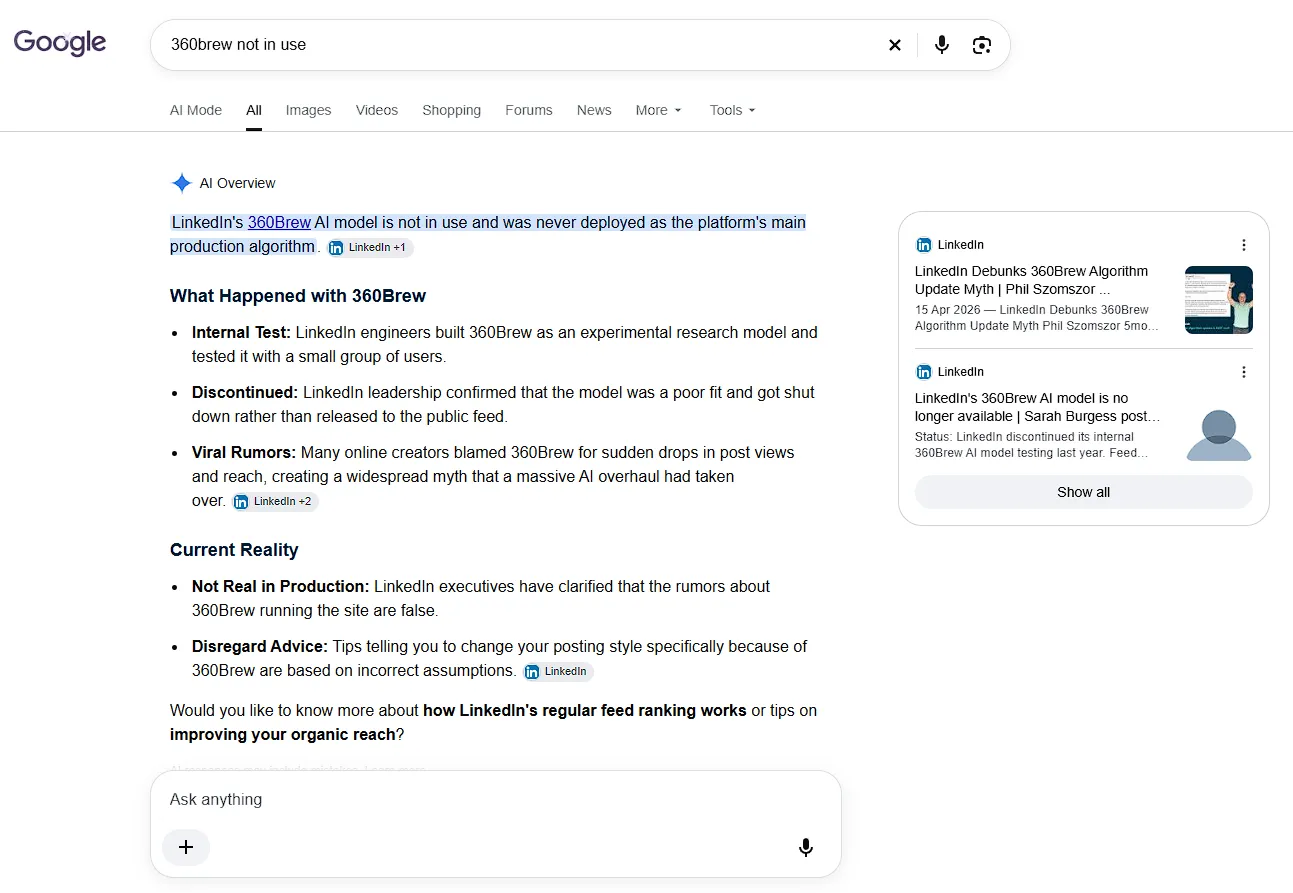
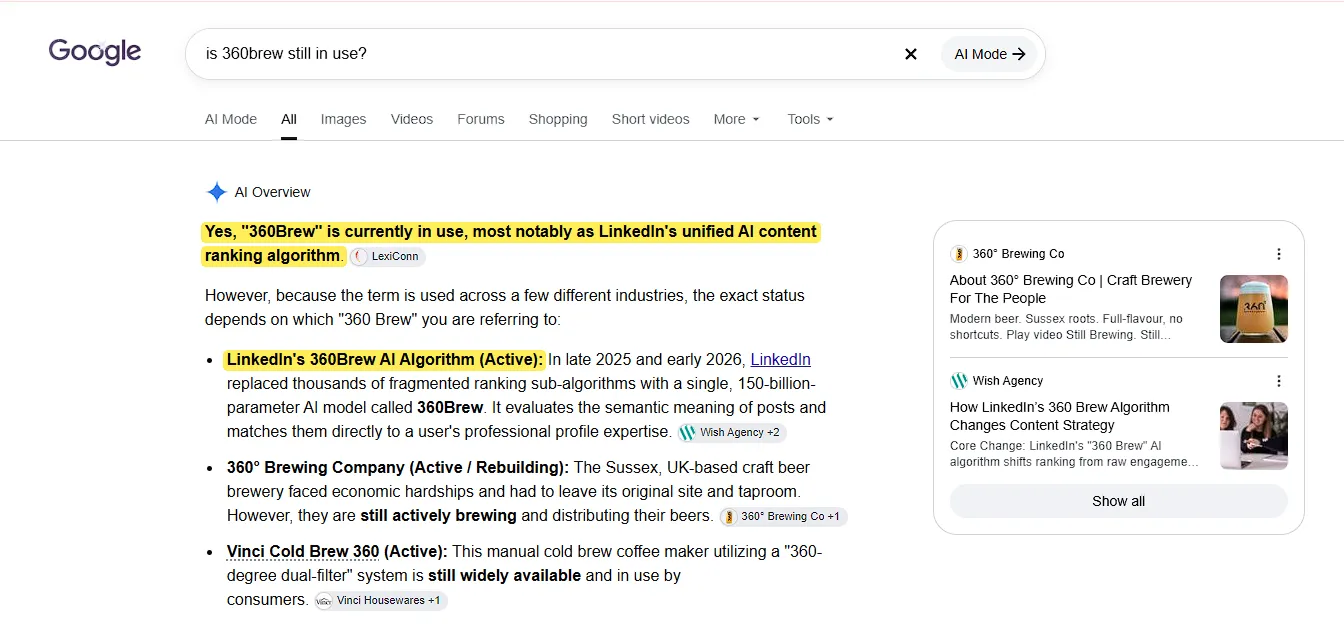
The incorrect info is still being perpetuated, across blogs, social media posts and agency websites (many bearing the “tells” of AI writing). Filter a Google search for “360brew” to the past week, or even the past 24 hours, and you’ll probably still find people posting about it as though it’s in use (unless you’re reading this way in the future, in which case I hope they’ve brought Caramelised Biscuit Brew back).
resisting correction
I don’t actually care about this specific fact being wrong, what concerns me as an SEO are the implications of how incorrect info (even if once true) can not only be confidently outputted as fact in AI answers, but then repeated infinitely and unchecked. The use of AI in seeking information has exploded and many users take the information it outputs on face value. If something has made its way into training data, or is prevalent enough online - then how do you “correct” that misinformation? Incorrect info online is nothing new, but now it’s being given the semblance of credibility when it appears in an AI Overview, or it’s Claude telling it to you.
a hypothetical example
You start a company called “Who Goes Wear” that makes custom fancy-dress costumes. Customers love them, but in your first year you’re a small operation and orders can take a couple of months (Everybody has been watching the Fallout TV series and wants a vault jumpsuit, but creating a working Pip-Boy is tricky).
Reviews and reddit threads recommend you, with a caveat: don’t count on them if you need it quickly.
A year later you’ve expanded. Most orders go out within two weeks, and your website says so. The old reviews are still there. In October, someone asks an AI assistant whether you can deliver in time for Halloween. It answers: “Their website claims one to two weeks, but many customers report waiting over a month.”
In that example, the person asking the question won’t likely risk ordering from you - even though you’d be able to deliver in time. Even though you’ve updated your site, first party information isn’t automatically trusted because brands often say flattering and self-promotional things about themselves (the owner of this site smells nice and helps small old ladies in supermarkets by getting things off high shelves for them), so AI systems also lean on independent corroboration. The screenshots above show the sources the response cited to justify its answer.
can you correct the record?
You could chase more reviews that mention your faster delivery, or join those reddit threads yourself (honestly identifying yourself as a representative of the company). You could put effort into social media and digital PR to shift the wider narrative. None of it is guaranteed to work - you’re still at the mercy of the AI and what it decides to draw from. Those claims about your long lead times weren’t wrong, they’re just not right anymore.
LinkedIn’s correction lives in one employee’s post, while the claim it’s correcting lives in Forbes and on every agency blog that copied it. Correcting the record used to mean updating your own page. Now it means changing what everyone else says about you, and hoping the AI notices.
Thanks for stopping by. Add me as a preferred source on Google to see more of my posts in your results.